
When investing in fixed-income products, balancing considerations like safety, liquidity, and income is essential.

'Obesity, especially central obesity and increased visceral fat due to physical inactivity, along with the consumption of high-calorie, high-fat, and high-sugar diets, are major contributing factors.'

rediffGURU Vipul Bhavsar answers readers' personal income tax queries.

Capital markets regulator Sebi has extended the deadline for implementation of rules related to mandatory confirmation or denial of market rumours by the top 100 listed companies. The deadline has been extended for the top 100 listed companies by market capitalisation to June 1 from February 1 this year at present, according to a circular by the Securities and Exchange Board of India (Sebi). For the top 250 listed entities, the rule will kick in on December 1, 2024, from the current requirement of August 1, 2024.

Commissions paid to mutual fund distributors (MFDs) increased by over 20 per cent for most large fund houses in 2023-24 (FY24), driven by a sharp market rally and strong inflows. The largest fund house, SBI Mutual Fund (MF), which now manages nearly Rs 10 trillion in assets, paid Rs 2,025 crore to its major distributors - 21 per cent higher than the Rs 1,675 crore payout in 2022-23 (FY23).

There is a reason this 11 year phenomenon is a rule as much as it is an observation. It speaks to the nature of man and what humans are like, explains Aakar Patel.

Release of key macroeconomic numbers, monthly derivatives expiry, and global cues are likely to drive stock market movement this week, according to analysts. Markets will also be reacting to remarks made by the US Federal Reserve Chair Jerome Powell, they said. "This week, we expect the market to witness a gradual up-move with stock-specific action.

'How many jobs will be created when you complete your course?' 'How many people will compete with you?' 'What is the minimum and maximum salary you can expect?' 'Which are the companies that will offer you a job?' 'What skills do you have to develop?' 'How long will it sustain?'

Credit card spending in September recorded strong growth of 25 per cent year-on-year (Y-o-Y), marking the highest increase in six months. Even as many banks saw higher slippages during the July-September quarter of 2024-25, spending growth exceeded 20 per cent for the first time since February. According to the latest data released by the Reserve Bank of India (RBI), September spending reached Rs 1.76 trillion, compared to Rs 1.42 trillion in the same period a year ago. In August 2024, credit card spending was Rs 1.68 trillion.

Sebi has barred Ravindra Bharti Education Institute, co-founded by finfluencer and YouTuber Ravindra Balu Bharti, from the securities market and directed to deposit Rs 12 crore "unlawful gain" earned from the alleged unregistered investment advisory business. It has been directed to deposit the amount to an interest-bearing escrow account created specifically for the purpose in a nationalised bank. Additionally, the regulator has barred Ravindra Balu Bharti, his wife Shubhangi Ravindra Bharti and directors -- Rahul Ananta Gosavi and Dhanashri Chandrakant Gosavi -- from the securities market.
HDFC Bank, Reliance Industries and ICICI Bank remained among the top mutual fund (MF) buys for the second consecutive month in September. MFs deployed a net of Rs 15,000 crore into these stocks during the two-month period (August-September), revealed Nuvama Alternative & Quantitative Research reports.

The introduction of tax deducted at source (TDS) on income from central government securities and state bonds may not lead to a significant effect on retail participation, according to market participants. The Union Budget proposed that starting October 1, 2024, investors may face a 10 per cent TDS on investments in central government securities and state development loans (SDLs). "Last Budget, TDS on interest on securities was reintroduced.

'We don't know which bus is coming next. I know for sure whatever bus comes next, it will miss that too.'

In today's rapidly evolving digital payment landscape, security concerns remain a top priority for stakeholders across sectors.
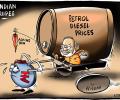
Price of international crude oil - the raw material for making petrol and diesel - dropped to a three-year low before marginally recovering but a revision in domestic petrol and diesel rates is likely only if lower rates are sustained, industry sources and officials said. Global oil benchmark Brent crude futures fell below $70 per barrel on Tuesday - the first time since December 2021 - but gained thereafter after Hurricane Francine hit crude supply in the Gulf of Mexico. Brent rose above $71 a barrel on Thursday while West Texas Intermediate advanced to trade near $68.

The rupee remains overvalued against the currencies of India's trading partners, even as it hit record lows against the dollar in August and September. According to the Reserve Bank of India's (RBI) real effective exchange rate (REER) index, the rupee stood at 5.5 per cent above its fair value in August, down from 7.7 per cent in July. This slight easing followed fears of a US recession and the unwinding of yen carry trades, which exerted pressure on the Indian currency.

As a year of despair and darkness comes to a welcome end, Rediff.com wishes every reader all the very best for a HEALTHY, HAPPY, PEACEFUL, PROSPEROUS, SAFE AND SUCCESSFUL 2021.

Who says romance is dead in the age of coronavirus?

'Investment by insurers in the Bima Sugam India Federation is illegal as it is a private limited company.'

The primary market is expected to remain vibrant, with at least 10 companies, including supermart major Vishal Mega Mart and Blackstone-owned diamond grading firm International Gemmological Institute (India) Ltd expected to raise a combined Rs 20,000 crore in the next month, merchant bankers said. Education-focused NBFC Avanse Financial Services, TPG Capital-backed Sai Life Sciences, hospital chain operator Paras Healthcare, and investment bank DAM Capital Advisors are also among the companies planning to launch their IPOs in December, they added. The companies aim to raise a total of Rs 20,000 crore through their public offerings.

India has slipped two places on the World Economic Forum's Global Gender Gap index to 129th place, while Iceland retained its top position in the rankings published on Wednesday. Within South Asia, India was ranked fifth after Bangladesh, Nepal, Sri Lanka and Bhutan, while Pakistan was ranked last. Globally, Sudan was ranked last on the index of 146 countries, while Pakistan slipped three places to 145th.
As the results season kicks in, the quarterly earnings numbers of several blue-chip firms -- such as Infosys and Reliance Industries -- along with global trends and trading activity of foreign investors, will determine equity market movement in the holiday-shortened week ahead, according to analysts. The domestic WPI inflation data for June -- scheduled to be announced on Monday -- will also influence trading sentiments, traders said. Markets will remain closed on Wednesday for Muharram.

Ask rediffGURU and PF expert Milind Vadjikar your insurance, stocks, mutual fund and personal finance-related questions.

Roughly 40% of this projected outlay is expected to go towards emerging industries, including green hydrogen, clean energy, semiconductors, and electric vehicles.

Quarterly earnings of corporates, trading activity of foreign investors and inflation data are the key factors that are expected to drive the momentum in the equity markets this week, analysts said.

'By extending the definition of 'personal' to include institutions and not just individuals, the State has equipped itself with a tool to block access to most kinds of information.'

A teacher of a private coaching institute in Madhya Pradesh's Indore was stripped and beaten up on Wednesday by a group of people, who later took him to a police station for allegedly indulging in obscene acts with a 17-year-old girl preparing for NEET exam, an official said.

Messaging app Telegram has taken decisive action against bots that were reported for sharing sensitive data related to Star Health and Allied Insurance Company, and is actively keeping an eye on their re-emergence, a company statement said. "The bots reported to Telegram for sharing Star Health data were immediately removed and moderators are monitoring to prevent them from being recreated. "The sharing of private information on Telegram is expressly forbidden and such content is deleted whenever it is found," the statement said.

Their one-liners are pithy, sharp and can never be forgotten. Happy Teacher's Day, Dear Teacher.

Shares of state-owned bank stocks were under pressure on Monday due to muted deposit and credit growth numbers reported by these lenders in the October-December quarter (Q3) of 2024-25 (FY25). The Nifty PSU Bank index was down 4 per cent, with Union Bank of India emerging as the biggest loser as its shares fell 7.5 per cent to close at Rs 114.7, followed by a 5.7 per cent drop in shares of Bank of Baroda (BoB) to Rs 228 and a 4.7 per cent slide in shares of Bank of India to Rs 99.8 on the National Stock Exchange.

rediffGURU T S Khurana answers readers' personal income tax queries.
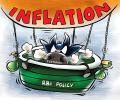
The Reserve Bank on Wednesday retained the retail inflation projection at 4.5 per cent for fiscal 2024-25, with Governor Shaktikanta Das stressing that the central bank will have to closely monitor the price situation and keep the "inflation horse" under tight leash lest it may bolt again. Unveiling the October bi-monthly monetary policy, the Governor also said the flexible inflation targeting (FIT) framework has completed 8 years since its introduction in 2016 and is a major structural reform of the 21st century in India.

rediffGURU Ulhas Joshi answers your mutual fund queries.

The average cost of data breaches in India reached $2.18 million in 2023, marking a 28 per cent increase since 2020, according to the Reserve Bank of India's (RBI) Currency and Finance report for 2023-24. The report said that India's average data breach cost was still below the global average. The most common attacks in India are phishing which was at 22 per cent and stolen or compromised credentials was 16 per cent. The automotive industry is highly vulnerable to cyber attacks, whereas the banking and financial services sector, benefiting from stringent regulations, enjoys comparatively stronger protection.

Seven journalists were incarcerated in India in 2021 and 2022, the highest in three decades.

Worries related to the Iran-Israel conflict, quarterly earnings and foreign investors' trading activity are the key factors that would dictate stock markets this week, analysts said. Besides, trends in Brent crude oil and movement of the rupee against the dollar will also be crucial factors. This week will be crucial for the market amid ongoing worries about the conflict between Iran and Israel, said Pravesh Gour, Senior Technical Analyst, Swastika Investmart Ltd.

The Insurance Regulatory and Development Authority of India (IRDAI) has removed the age cap on buying health insurance policies, effective from April 1, 2024. Earlier, individuals were restricted to purchasing new insurance policies only until the age of 65. However, after the recent changes that have come into effect from April 01, 2024, anyone, regardless of age, is eligible to purchase a new health insurance.

India's unemployment rate is at a record low and the country's labour market is undergoing a structural transformation, a report said on Tuesday. In the new report, the economists at the country's largest lender SBI also pitched for a "reinterpretation of old fashioned rhetoric" while looking at a subject like employment. "India's unemployment rate is at a record low, India's labour market is undergoing a deep structural transformation with self-entrepreneurship across all echelons and higher educational attainment emerging as key enablers," the report said.

Reserve Bank has directed banks to provide their eligible customers with an option to choose from multiple card networks at the time of issuing credit or debit cards, a move which will benefit card users. The central bank also asked issuers of credit cards not to enter into any arrangement or agreement with card networks that restrain customers from availing the services of other networks.
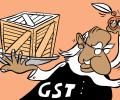
GST collection in May rose 12 per cent to Rs 1.57 lakh crore, the finance ministry said on Thursday. The gross Good & Services Tax (GST) revenue collected in the month of May, 2023 is Rs 1,57,090 crore of which Central GST is Rs 28,411 crore, State GST is Rs 35,828 crore, Integrated GST is Rs 81,363 crore (including Rs 41,772 crore collected on import of goods) and cess is Rs 11,489 crore (including Rs 1,057 crore collected on import of goods).
